Preventive Medicine
July 2024
While I shadowed a local cardiologist in my sophomore year, he discussed the prevalence of treatable, type-2 diabetes in the rural regions of southern India. This was due to their predominantly rice-based diet and the absence of testing facilities. He told me that the prolonged non-symptomatic nature of the disease often led to blindness, kidney failure and limb amputations. I was deeply affected by this knowledge as my own family hails from the southern state of Tamil Nadu in India.
My family are trustees of the 10th century village temple at Pillayarpatti in Tamil Nadu. Last summer coincided with the refurbishment of the medical clinic within the temple compound funded by the temple trust. I knew that this was the opportunity I was looking for. Donating blood glucose monitors, along with other equipment, and establishing patient health monitoring stations at the temple medical clinic would offer a method for patients to regularly visit and have their vitals collected. The accumulated data could then be used by visiting physicians to more accurately diagnose and treat disease proactively. This was a simple initiative that I believed I could accomplish independently.


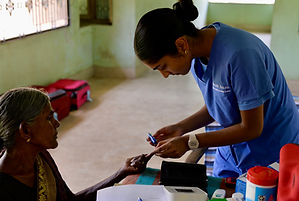
Here, I'm taking the blood pressure of a male patient.
Here, I'm taking the glucose level of a female patient.
Here, I'm taking the glucose level of a male patient.
Emergency Action
I remember my grandfather telling me a few years ago that there was a major function held at the village temple in Karaikudi, known as the Pilliyarpatti Temple. Having learned about the necessity of an AED in my Health Science theory class, I knew this could have been a huge issue if someone had gone into sudden cardiac arrest- especially because neither the temple nor the clinic are in possession of an AED.
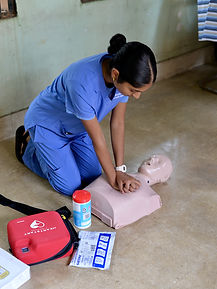


Here, I'm showing how to perform proper chest compressions
Here, I'm showing how to pinch the nose and tilt the chin to deliver breaths.
Here, I'm delivering two breaths by blowing into the mouth.
Here, I'm attaching the shock pads to the chest in the location indicated on the pads.